I am constantly amazed by the lack of “natural” spaces in Europe. Near my little Luxembourgeois town there is a cemetery, a green promenade, and the Escher Déierepark, which is both a hilly trail, petting zoo, and picnic area. The hill is a steep climb – good exercise which I am in need of because I have gained 25 pounds since COVID lockdowns began – but it is extremely well managed. I felt like I am in a large park rather than the forests I go to back home.
In Illinois there are three woods that I always make time for: the Salt Creek Trail (where I first discovered my love of nature), Fullersburg Woods (which was one of my greatest discoveries when I would take hours long bike rides), and Blackwell Forest (a forested green surrounding a cratered glacial lake, if one bikes through the almost primeval forest to a secluded spot there is the perfect place to enjoy a lazy afternoon, set up a hammock, and read a book). These forests do not exist in Europe.
Perhaps it is a function of – like everything American – time and colonialism. When Europeans first arrived in the new world they devastated the indigenous population, 90% of native peoples died because of a plague that was started by a people they had no idea of. It is impossible to imagine what the New World looked like in 1491 but the mass devastation that overtook the continent’s original population gave the natural world space to breathe. By the time European settlers reached northern Illinois the great American natural landmarks were inhabited by ghosts and those poor souls lucky enough to survive. Nature had returned to a primordial state, loosing whatever character the native peoples had stamped into it.
The idea of natural spaces is, indeed, new. Yellowstone was only turned into a national park in the 20th century. Perhaps by the time the idea floated back to the old continent there was little left to be preserved. There was no ‘Americapox’ to devastate European civilization. Agricultural intensified as an ever-growing population demanded enough to eat. There are forests in Europe, Croatia has a beautiful primeval forest that I have always wanted to visit and the German Schwartzwald is a thing to behold but I have not had a chance to enjoy them. In Luxembourg, l’Anjou, and around Stuttgart the land must be cultivated! Capital demands it.
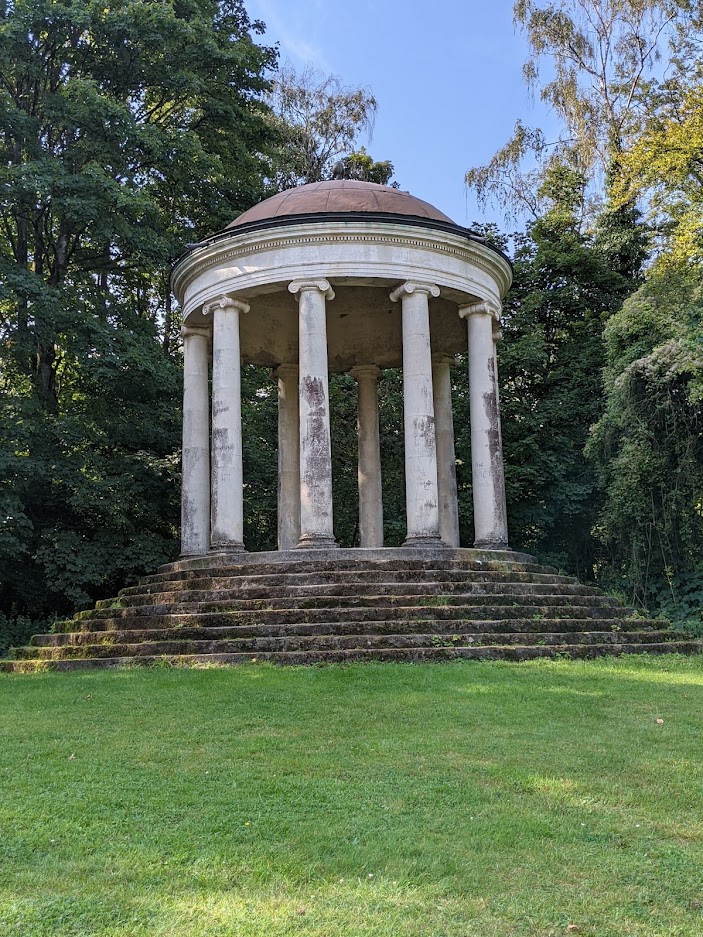
Transcendentalism and European romanticism make this difference clear to me. I have always imagined European romanticism to have a human character, there is a connection to the past that we do not (or chose not to) have in America. I think of the Roman ruins that were so often painted by young English gentry as they travelled the continent on their “grand tours.” Transcendentalism has always felt more connected with nature, with the untamed world to our west that is permanently etched into something that resembles and American psyche. I cannot drive west without a sense of adventure, even if I am just going to work. I have never understood why.
But the frontier is closed long ago, and I am now heading east. In the 17th and 18th centuries this was the future. Germans colonized the Vola, and they had already colonized Transylvania and the Baltic countries centuries earlier. Jew’s built new communities in the Pale of Settlement. Today there is an influx of people from the “young continent” (sub-Saharan Africa) to the old (Europe). I am not black, but I cannot help but see myself as art of that trend. The youth of the new worlds “colonizing” the old. I hope my fellow (African) immigrants can get something out of it, I would consider it a form reparations if they did. I do not think the descendants of settlers can stake the same claim to reparations, even if we are the victims of our own violence, perpetrated in the New World for the benefit of the Old.
While writing this in the park I was greeted by an older woman. “Moyan!” she said as she walked pass with two skiing sticks made specifically for hiking. I politely responded in kind. Andrew (Weeks) has taught me enough German that I can figure out that “moyan” is the local pronunciation of ‘morgan.” She said a few more Luxembourgish words to me, presumably about the journal I was writing in. I politely laughed as she continued up the hill. It seems fitting for that to be the first Luxembourgish word to leave my lips. Moyan!
Signed,
Andrew (Pfannkuche)
 Normal Thoughts